info@cougarcompanies.com
 239-275-9334

When the groundbreaking ceremony is over, the real work begins—and so does the risk. For General Contractors, Developers, and Municipal Partners across Southwest Florida, the transition from blueprint to bulldozer is where critical delays can be prevented or, unfortunately, created. Site work is the defining phase; it is the physical foundation upon which every subsequent scope of work depends. A well-executed preconstruction phase, focused heavily on minimizing unknowns during civil construction, is non-negotiable for project success in our unique, high-stakes environment.
The Foundation of Success: What Occurs Before the First Shovel Hits the Dirt
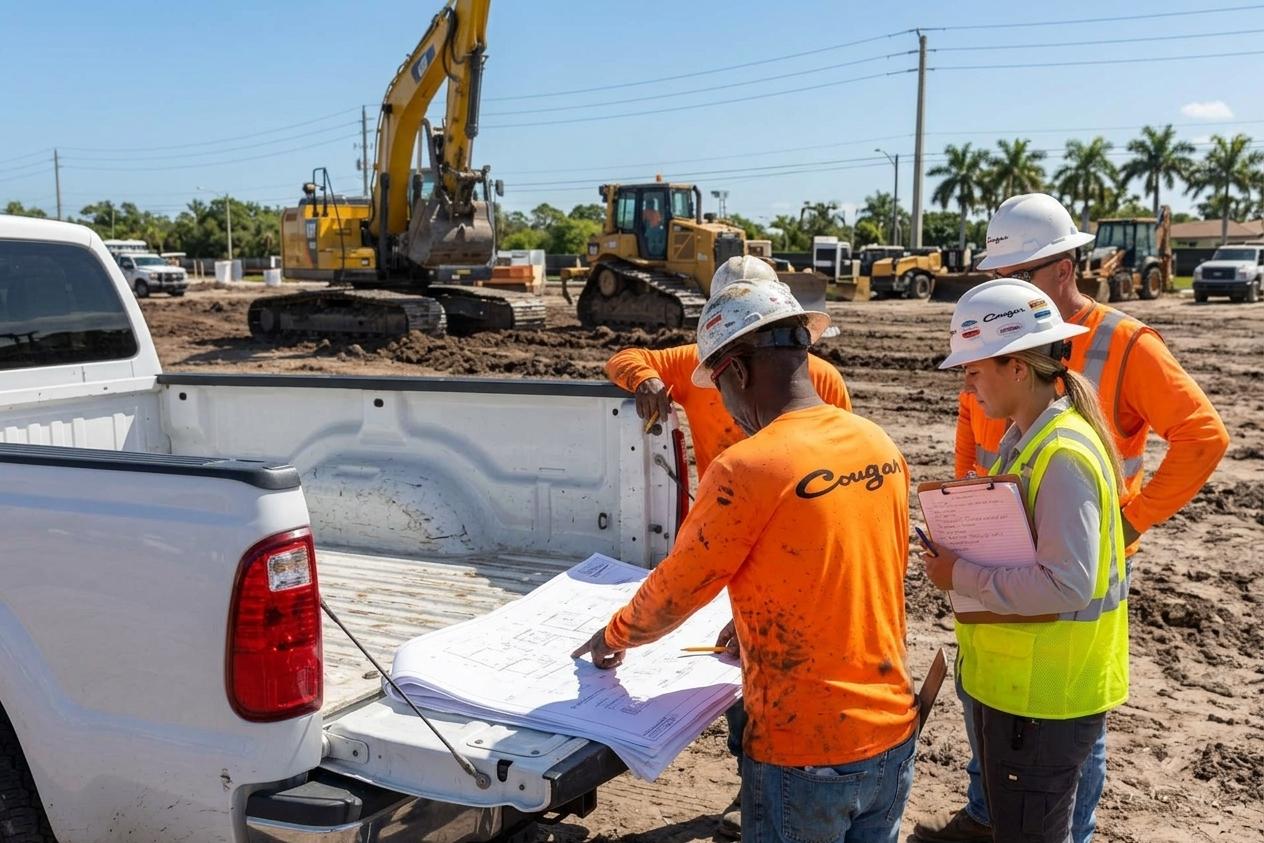
The most successful projects are not just well-built; they are meticulously planned before a single piece of heavy equipment arrives on site. This period of intense analysis, known as preconstruction, is often the differentiator between a project that finishes ahead of schedule and one that becomes mired in costly change orders and delays. General Contractors and Developers must shift their perspective from simply 'mobilizing' to 'strategically planning the sequence of early-phase operations.'
Comprehensive Due Diligence and Permitting
This early stage isn't just bureaucratic red tape; it's vital reconnaissance. We cannot overstress the importance of thoroughly validating all project inputs during this phase. This includes a deep dive into existing documentation and site conditions.
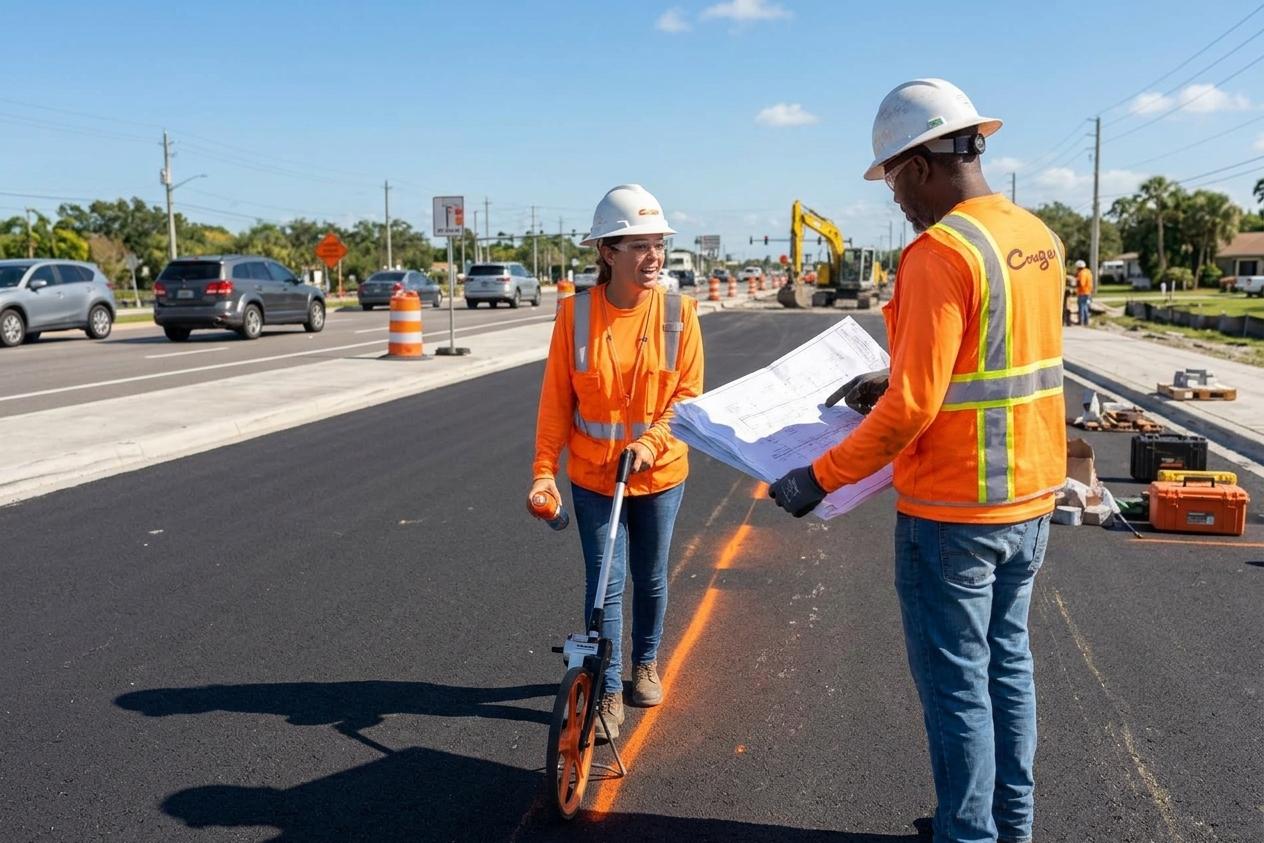
- Survey and Boundary Verification: Confirm all property lines, easements, and topographical benchmarks are accurate. Inaccurate base data can cascade errors throughout the entire civil phase.
- Title Work Review: Ensure all construction documents align perfectly with any recorded easements and restrictions. Overlooking a utility easement during the design phase is a common, costly mistake.
- Environmental Clearances: In Southwest Florida, early assessment for protected species (like Gopher Tortoises or various nesting birds) is mandatory and can dramatically affect timelines.
- Utility Confirmation: Do not rely solely on 'Sunshine 811.' While useful, it is not foolproof. The due diligence process must involve cross-referencing provided utility maps with physical evidence on the ground, and in critical areas, utilizing non-destructive methods like ground-penetrating radar or vacuum excavation (soft digging) to positively locate existing infrastructure *before* any design is finalized, let alone before excavation begins.
Mastering the Permitting Labyrinth
The permitting phase in Southwest Florida is complex and can be a significant bottleneck. It is not simply about submitting drawings; it's about active management. Successful developers know that parallel processing—advancing site plan approvals, building permits, and utility connection permits simultaneously where possible—is essential. Furthermore, establishing a transparent line of communication with key regulatory bodies like the local municipality, the Department of Environmental Protection (DEP), and the Water Management District is critical. We often advise clients to engage with these agencies during the conceptual phase to preemptively address potential environmental, storm water management, or traffic-related concerns, streamlining the formal approval process.
Strategic Execution: Leveraging Integrated Civil Capabilities
Once the preconstruction phase has established a rock-solid plan and all necessary permits are secured, the focus shifts to execution. This is where the true value of an integrated, highly capable civil construction partner becomes apparent. The sequential and interconnected nature of site work—where clearing must precede grading, and grading must precede underground utilities—means that any hiccup in one scope can halt all progress. Developers and General Contractors benefit immensely from partnering with a single, comprehensive trade partner for the entire "civil package."
The Power of the Integrated Self-Performing Contractor
For over five decades, we have proven that the single greatest way to mitigate risk and reduce delays is to control the critical path directly. A contractor that self-performs the majority of its work is inherently more agile and reliable than one relying heavily on a fragmented network of subcontractors.
- Schedule Control: When a single entity is responsible for clearing, earthwork, underground utilities, and concrete, they have total control over sequencing. There are no "handoff delays" while waiting for one subcontractor to finish so another can begin. If a particular crew gets ahead, resources can be strategically shifted to accelerate subsequent activities, or if a minor challenge arises, all affected crews are aligned on the contingency plan.
- Enhanced Coordination: The interface between different civil activities is where the most significant risks lie. A self-performing crew doesn't just work alongside each other; they are trained on a unified set of safety protocols and communication standards. A single Project Manager overseeing the entire spectrum can ensure the grading crew understands exactly how the specific pipe elevations for underground utilities will impact their final work.
- Accountability and Responsibility: When a challenge occurs—and they often do in heavy civil construction—there is no finger-pointing. The single contractor takes complete responsibility for developing a solution and implementing it. This drastically reduces administrative headaches and cost dispute potential for the client.
Navigating the Challenges of Southwest Florida Conditions
Managing the unique, environmental factors of Southwest Florida is not just an operational consideration; it's a core requirement for a successful project. What may be standard practice in other parts of the country can be a recipe for disaster in Florida. General Contractors and Developers must prioritize local expertise.
- High Water Tables and Dewatering: This is perhaps the most significant challenge. Throughout much of the region, the seasonal high-water table is only a few feet below the ground surface. Successfully installing deep sewer systems or constructing storm water management basins requires robust, engineering-driven dewatering systems to be implemented and managed continuous-ly. Understanding the permit requirements for dewatering discharge is just as critical as the physical pumping.
- Unpredictable Subsurface Conditions: "Good sand" is not a given. Our area is home to pockets of organic material (muck), highly plastic clays, and variable limestone. Extensive geotechnical testing during the preconstruction phase is essential. If unforeseen subsoil is encountered, having an experienced excavation crew ready to perform mucking and bring in quality structural fill is vital to ensure the structural integrity of future building pads and roadways.
- The Rain (and Hurricane) Factor: Our intense, daily afternoon rain storms in the summer can quickly saturate a site, turning a production-ready area into an unusable mud pit. Successful heavy civil operators understand "wet weather" management: proactively maintaining positive drainage on the site, properly stabilizing haul roads, and carefully timing operations to avoid working in saturated conditions. They also know that every site in Florida must have a thoroughly reviewed and practiced Emergency Action Plan for hurricane preparation.
Your Site Readiness Pre-Con Checklist
Ensure your next major site work project gets off to a flawless start by reviewing this critical checklist during your preconstruction planning.
- [ ] Comprehensive Geotechnical Report: Conducted an appropriate number of soil borings across the entire site, testing to suitable depths for all planned utility installations and building foundations.
- [ ] Phase 1 (and 2, if necessary) Environmental Site Assessment: Complete and cleared, with all required permits from environmental agencies secured.
- [ ] Boundary and Topographical Survey: Verified to be current within the last 6 months and signed off by a Florida Licensed Professional Surveyor and Mapper.
- [ ] Utility Location and SUE: Utilizing SUE (Subsurface Utility Engineering) when necessary, positively identify all existing utility lines, both public and private. Cross-reference field findings with all available record drawings.
- [ ] Full Permitting & Regulatory Approval: All relevant permits, including local site plan, county, and Water Management District permits are approved, with all conditions fully understood.
- [ ] Traffic Control Plan: If the project impacts public roads, a full traffic control and MOT (Maintenance of Traffic) plan is developed, approved, and ready for implementation.
- [ ] SWPPP and Erosion Control: A comprehensive Stormwater Pollution Prevention Plan is in place, and all required erosion and sediment control measures are identified and will be installed *before* land clearing begins.
- [ ] Site Logistics Plan: Clearly define and communicate haul routes, material staging areas, construction entrances, and on-site traffic flow.
- [ ] Dewatering Strategy: If excavations are deeper than 3-4 feet, a complete dewatering plan, including permit-required discharge handling, must be ready.
- [ ] Post-Demolition/Pre-Clearing Inspection: If the project includes demolition, a final thorough inspection must be done to ensure all structures are down, and all hazards are removed prior to land clearing.
Conclusion
Success in the early phases of construction is not accidental. It is the direct result of proactive planning, deep local knowledge, and strategic execution. For General Contractors, Developers, and municipal entities in Southwest Florida, investing time and resources into a comprehensive preconstruction process, and then partnering with a qualified, highly experienced heavy civil contractor who self-performs the core site work, underground utilities, and concrete scopes, is the single most effective strategy for delivering projects on time, on budget, and to the highest standards of quality. Don’t just build; build smart from the ground up.